
A complete sensing system for continuous process monitoring
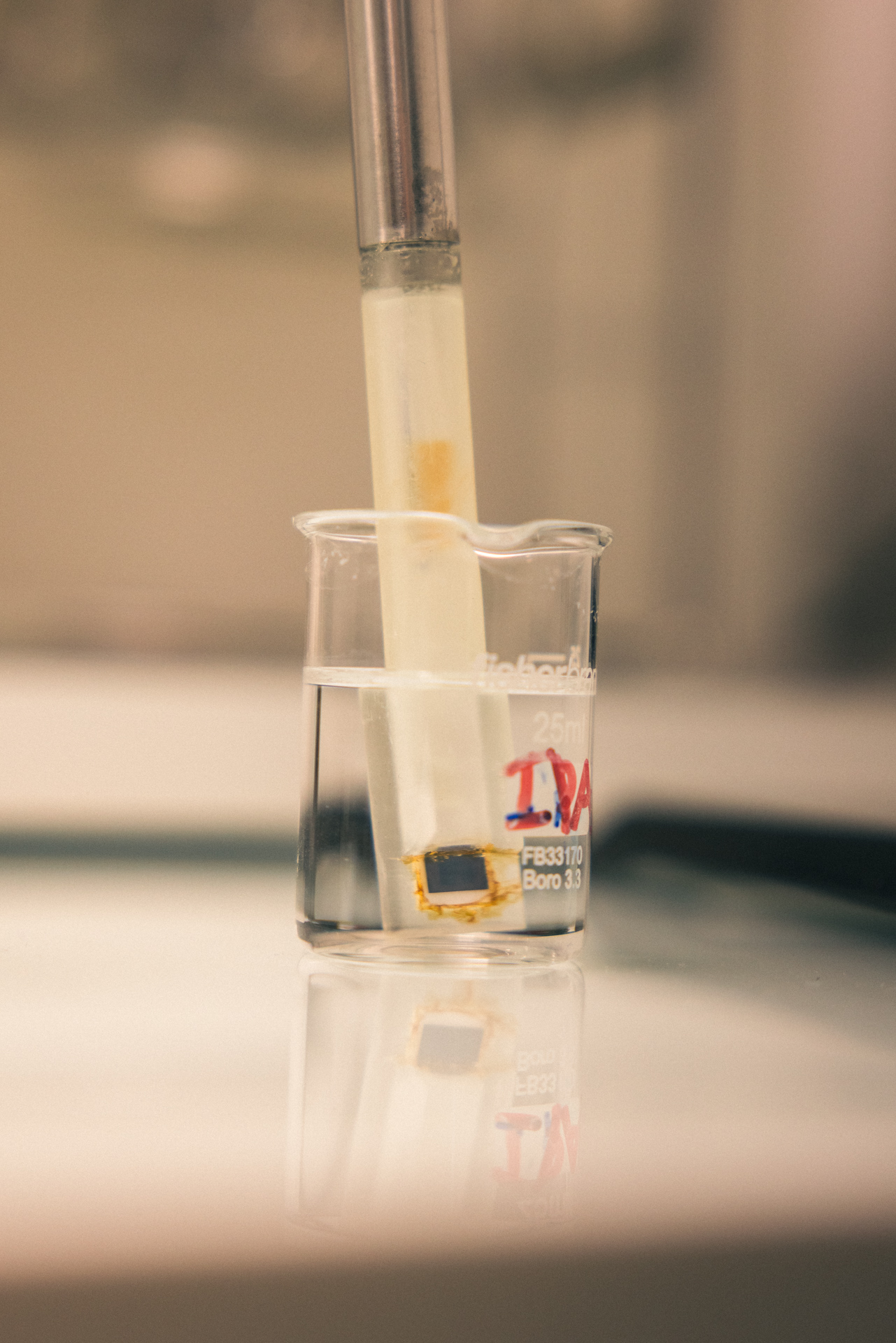
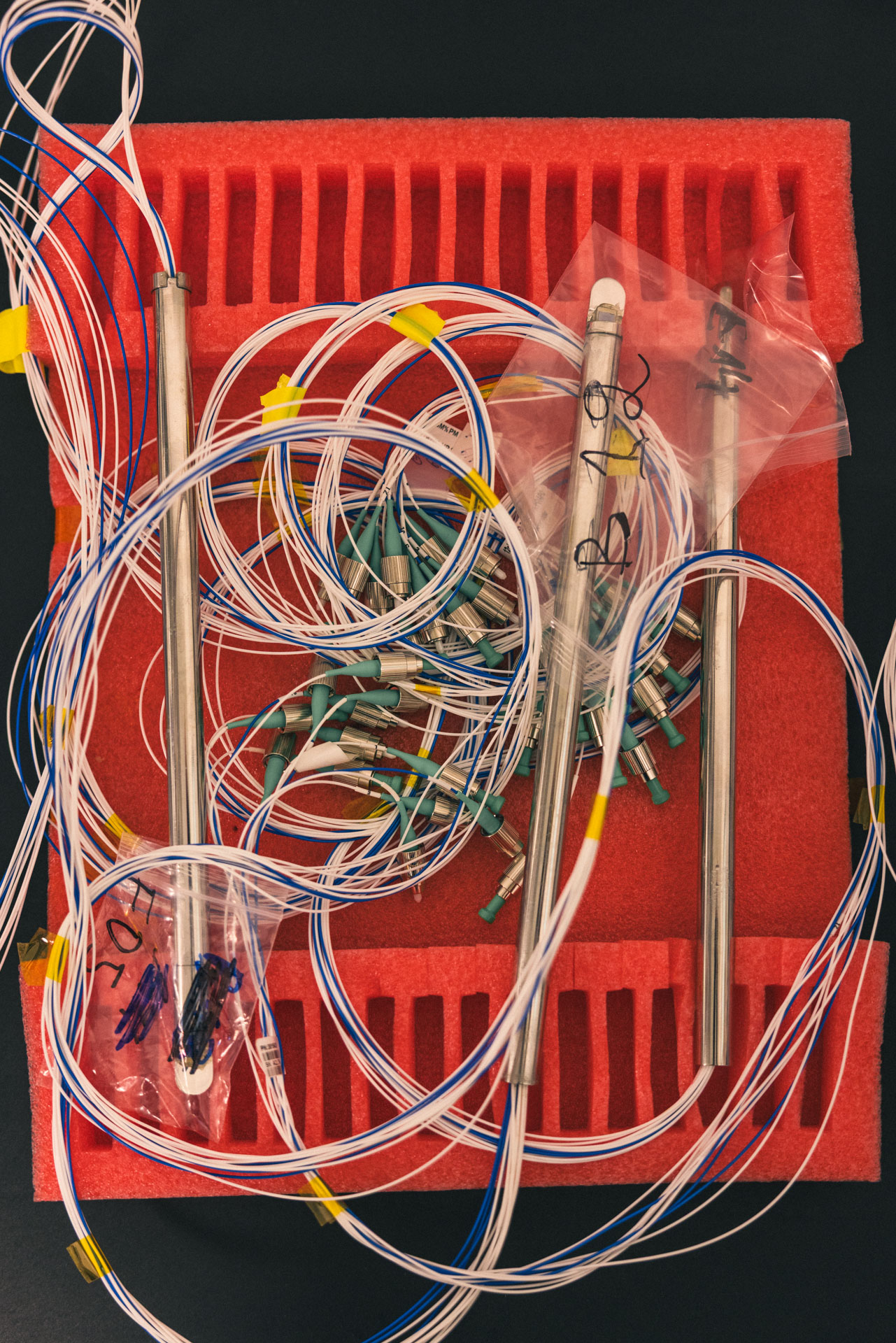
A waveguide-enhanced Raman sensor — Raman-on-a-chip — that reads molecular composition continuously, in-line, without sampling.
Paired with a control unit and software layer, to bring that data into view.
Raman sensor
Uses inelastic light scattering to analyze molecular composition — what and how much of it is inside a bioprocess. Provides non-invasive, real-time data on metabolites, nutrients and byproducts, reducing the need for offline sampling.
pH sensor
Measures how acidic or basic the medium is. A shift in pH can slow growth or even kill cells. Cells need a stable and specific pH to function properly — enzyme activity, nutrient solubility and metabolic reactions all depend on it.
Biomass sensor
Tracks the turbidity and the number of cells in the culture. Detects changes in optical density or capacitance, giving real-time data on growth dynamics. Helps regulate nutrient supply and detect culture health changes.
O₂ sensor
Measures dissolved oxygen. Aerobic fermentations require accurate oxygen monitoring — if levels drop too low, respiration slows, leading to reduced energy production and possible metabolic stress. Proper oxygenation maintains cell viability and productivity.
Temperature sensor
Maintains thermal stability. Heat fluctuations affect enzyme function, membrane integrity and reaction rates. Bioprocesses require strict temperature control to ensure optimized metabolic activity.
CO₂ sensor
Monitors carbon dioxide, a key byproduct of metabolism. Excess CO₂ alters pH and affects cellular respiration. Controlling CO₂ prevents shifts that lower productivity.
What it measures
Using inelastic light scattering, the sensor reads the molecular composition of your process directly — what compounds are present, and how much of each.
It delivers non-invasive, real-time data on metabolites, nutrients, and byproducts, reducing dependence on offline sampling.
Same method, new advantages
Raman spectroscopy is a proven analytical method — quantitative, highly specific, and compatible with aqueous media, requiring no sample preparation. InSpek integrates it onto a photonic chip — waveguide-enhanced Raman spectroscopy, or WERS — which changes what's possible compared to traditional free-space Raman probes:
Cost
Mass-producible chips and fewer discrete components sharply cut the cost of optical probes.

Size
Nanofabrication packs interaction lengths of up to tens of centimeters onto millimeter-scale chips, replacing bulky free-space optics.

Sensitivity
Strong light confinement in the waveguide concentrates the exciting field, producing a stronger Raman response — well suited to bulk solutions.

speed
No sample prep, non-destructive, label-free: high-quality data in seconds.

Cost
Mass-producible chips and fewer discrete components sharply cut the cost of optical probes.
Size
Mass-producible chips and fewer discrete components sharply cuNanofabrication packs interaction lengths of up to tens of centimeters onto millimeter-scale chips, replacing bulky free-space optics.t the cost of optical probes.
Sensitivity
Strong light confinement in the waveguide concentrates the exciting field, producing a stronger Raman response — well suited to bulk solutions.
speed
No sample prep, non-destructive, label-free: high-quality data in seconds.
Raman-on-a-chip extends where Raman can be used — single-use systems, small-volume samples, multiple points along a reactor or line.
Its reduced footprint means it can sit exactly where the signal matters, with faster response for dynamic processes.
- Flexible in-line integration, adapted to process constraints
- Non-invasive — no disruption to ongoing processes
- Scalable across stages, from lab development to industrial production



Proven in the field
In fed-batch fermentation using engineered S. cerevisiae, InSpek's platform continuously tracked p-coumaric acid, glucose, ethanol, glycerol, and acetic acid in real time — validated against HPLC across four runs. The resulting process visibility supported a 2.3x increase in p-CA production compared with traditional batch fermentation.
Adapt the system to your process
Continuous real-time data, direct insight into process dynamics, reduced reliance on manual sampling, structured data ready for analysis and modeling.


How it fits into your setup
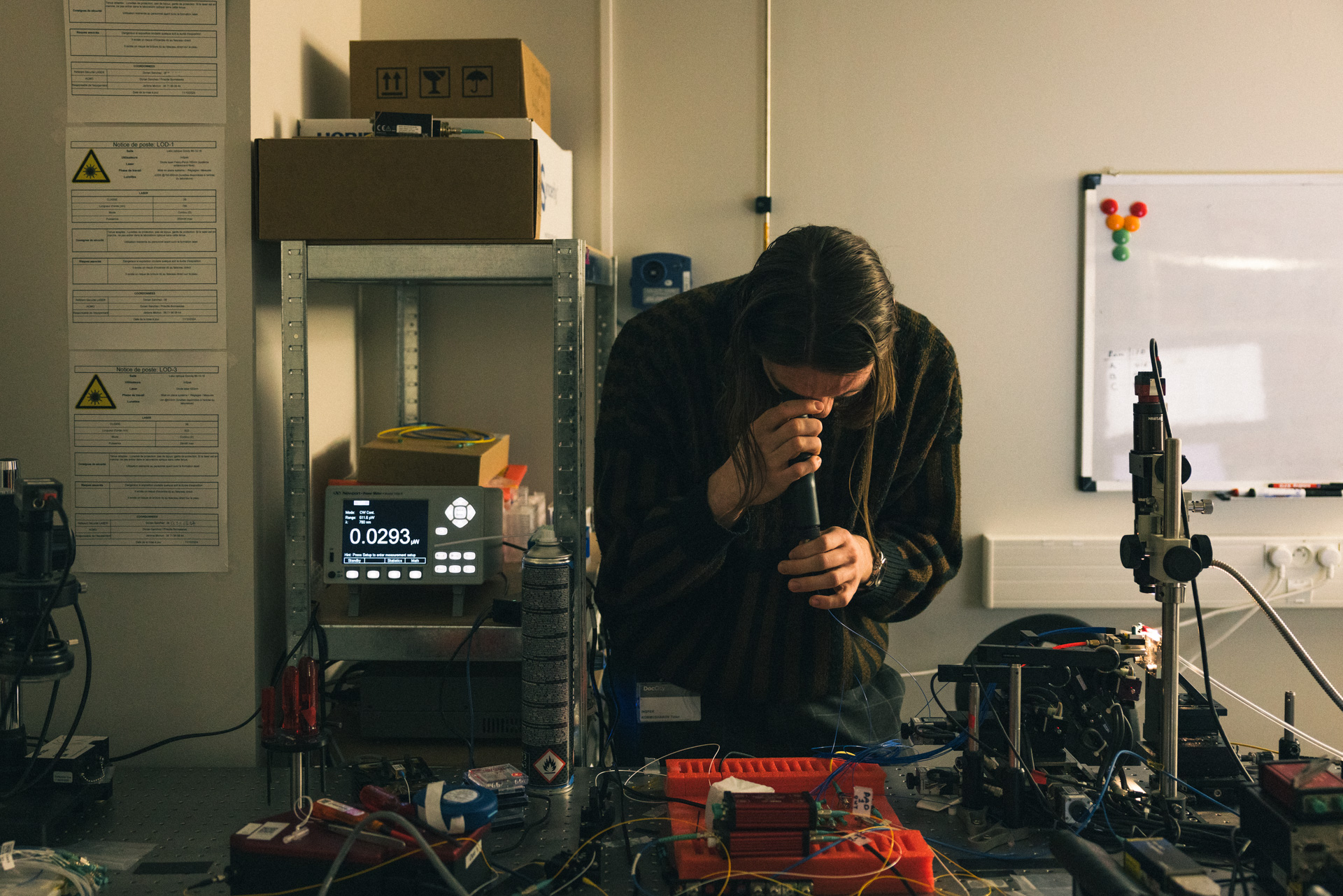
The Raman sensor pairs with a control unit for signal acquisition and a software layer that structures and visualizes the data it generates — both currently in development alongside the sensor platform.

Hardware is the entry. Data is the leverage. Intelligence is the multiplier.

Backed by leading partners across biotech
Flexible in-line integration, non-invasive operation, scalable across stages from lab to industrial production.









See how InSpek fits your process
Start with a pilot. See what your process has been hiding.